
 by
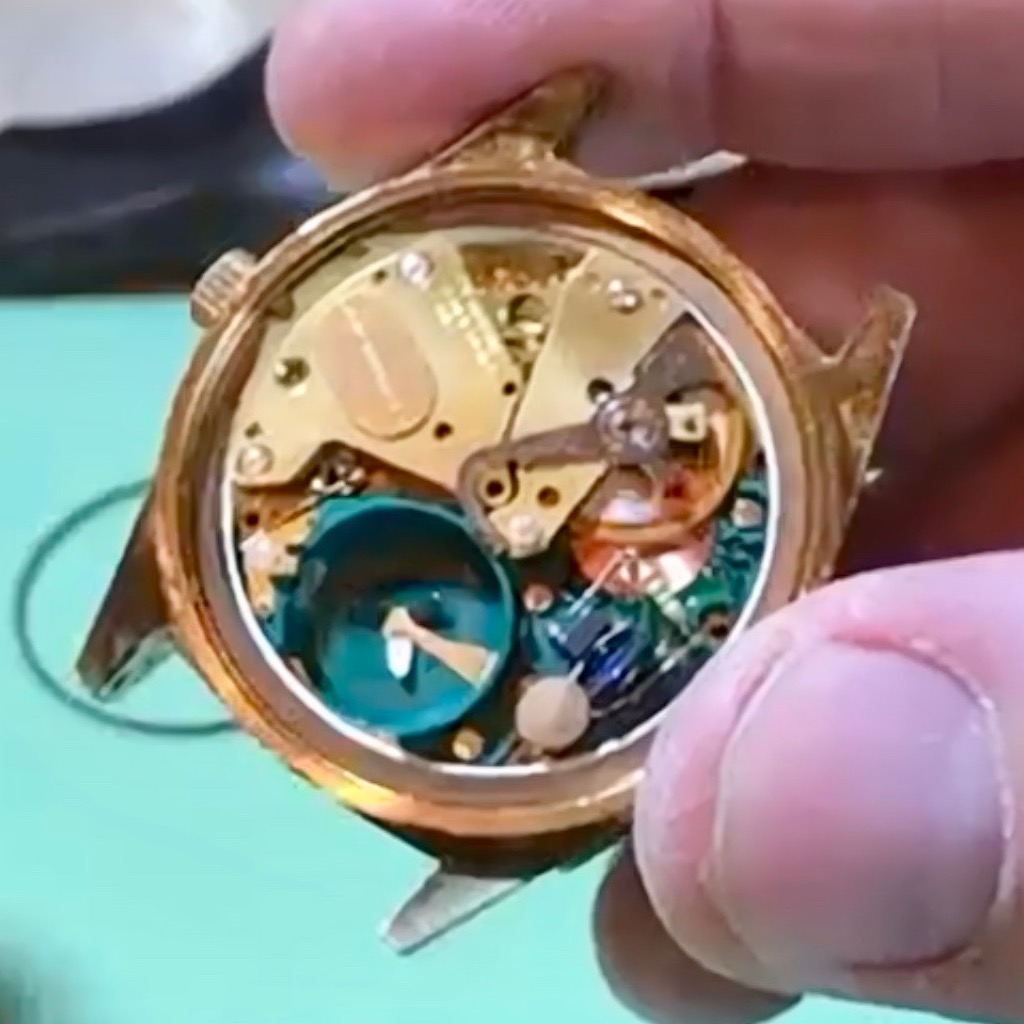
by I always get a kick out of learning something new in the world of horology. While I’m very familiar with quartz and mechanical watches, there are still some movements out there that remain a bit of a mystery. The original Bulova Accutron tuning fork is a perfect example, and in the video below I take a quick look at another interesting, and relatively rare movement.
Prior to the general availability of quartz watches, there were several forms of “electronic watches” in which the traditional balance wheel and hairspring were powered not by a mainspring, but by some form of electrical impulse. The tuning fork by Bulova was just such a movement. Along with the tuning fork, other forms of electronic movements included the fixed coil, the moving coil, and finally, the transistorized movement. This Stellaris is just such a watch. Enjoy the video.
-Ranch Racer


The balance wheel is the “little motor” – it has contacts under the balance that switch the transistor circuit on and off, and a coil, (visible under the balance using a microscope) is pulsed by the transistor. There is a magnetic sector on the balance wheel that the coil pulls and repells to make the balance wheel turn. The balance wheel in turn sends it’s motion to what looks like a pallet-fork, but is actually a device to move the first gear in the gear train.
In a standard watch (clock) – with a main spring, the balance wheel regulates the speed the spring power is released through the gear train – meaning all the components experience quite a bit of force on them. In this sort of design (and with the Accutron) – the balance or tuning fork to an impulse wheel provide power TO the gear train which only has to turn the watch hands. MUCH less force is used. The ultimate is quartz watches with no jewels at all – they can be quite accurate and long lived due to the small forces on the components.. right down to some having a plastic gear or two in the gear train.